
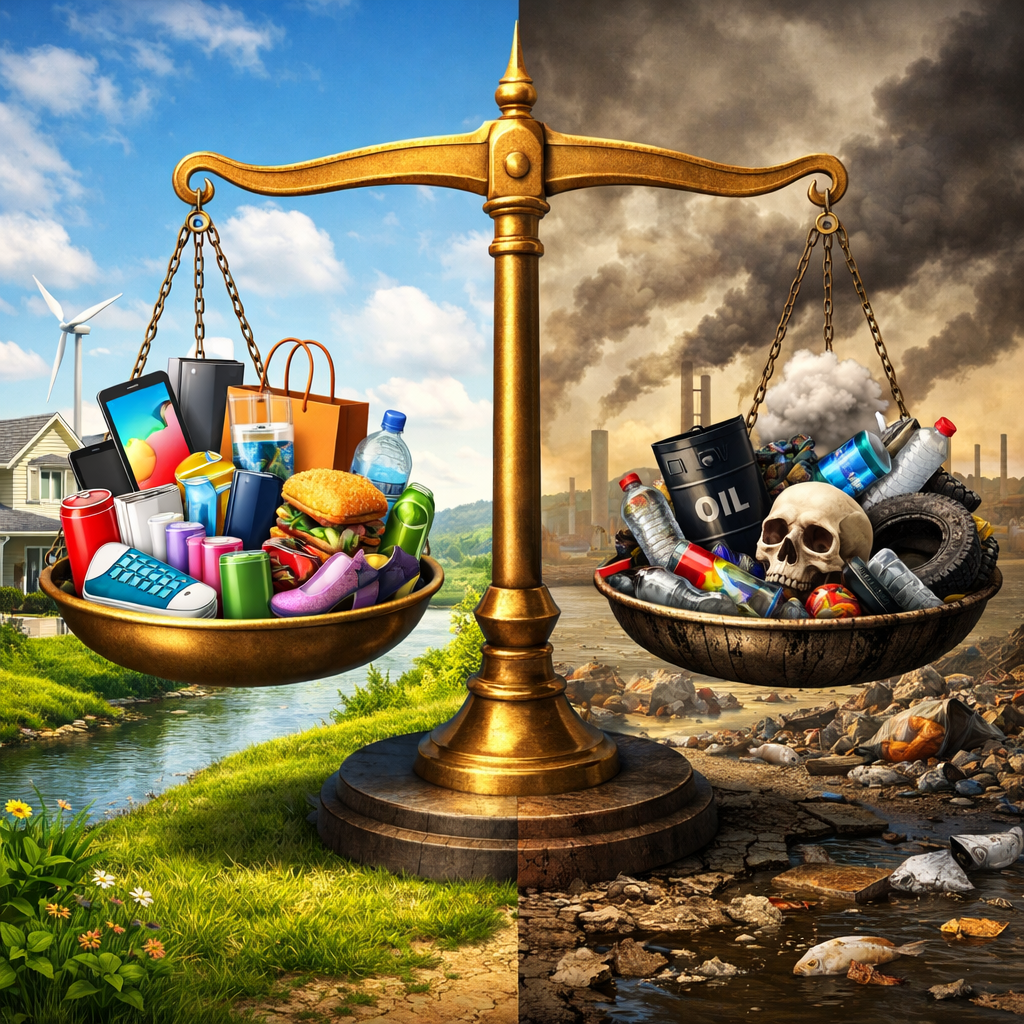
Case Study
In 2023, a study by the Silent Spring Institute and UC Berkeley revealed that over 5,000 tons of toxic chemicals are released each year from everyday consumer products used inside homes and workplaces. These include shampoos, lotions, cleaners, fragrances, and paint removers.
The study found that many of these products contain volatile organic compounds (VOCs) linked to cancer, reproductive harm, and endocrine disruption. Yet millions of people continue using them daily, often without reading labels or questioning ingredients.
This is a perfect real‑world example of how convenience, habit, and perception shape chemical exposure far more than chemistry alone.
Read the report HERE
Dismantling the Case Study
The Environment Involved
- Indoor spaces: homes, offices, schools
- Products used daily: personal care, cleaning, fragrances
- Air quality: VOCs evaporate and accumulate indoors
- Human exposure: inhalation, skin contact, long-term accumulation
Indoor air can be 2–5 times more polluted than outdoor air due to chemical emissions from consumer products (According to US EPA data).
Why This Practice Has Been Followed
People continue using harmful chemical products because:
Convenience dominates decision-making: Convenience reduces cognitive load. People choose products that are easy to access, familiar, fast-acting, and marketed as “fresh,” “clean,” and “long-lasting.”
Scent = Cleanliness (a learned association): Fragrances are engineered to evoke emotions of purity, comfort, and identity. This creates a psychological dependency on scented products.
Trust in brands and packaging: Consumers assume, “If it’s sold in a store, it must be safe.”
Lack of transparency: Companies are not required to disclose full ingredient lists for many products. People cannot avoid what they cannot see.
The Psychology Behind It
This is where the behavioural science lens can be used to decode:
The Psychology of Convenience: According to Psychology Today, convenience is a core modern motivator that shapes choices even when risks are known.
Convenience reduces effort, time, and decision fatigue. But it increases chemical exposure, environmental burden, and long-term health risks
Risk Perception Bias: People underestimate risks that are invisible, familiar, and associated with pleasant experiences (e.g., fragrance).
Habit Loops: Daily routines (shower → lotion → perfume → deodorant) become automatic. Automatic behaviours bypass critical thinking.
Social Norms: We copy what others do. If everyone uses scented cleaners, we assume it’s normal and safe.
Information Avoidance: People avoid reading labels because it is overwhelming, creates cognitive dissonance, and threatens comfort and identity.
What Problem This Creates for Environmental Safeguarding
The consequences extend beyond personal health.
Indoor Air Pollution: VOCs react with indoor air to form secondary pollutants like ozone and formaldehyde.
Water Contamination: Chemicals washed down drains enter wastewater systems and eventually rivers.
Bioaccumulation: Endocrine disruptors (phthalates, parabens) accumulate in ecosystems.
Waste Streams: Plastic packaging + chemical residues = long-term environmental burden.
Policy Blind Spots: Because exposure happens indoors, it is often overlooked in environmental regulation.
What Does Science Say?
Study 1: Toxic VOCs in Consumer Products
- Over 100 product categories contain carcinogenic or reproductive‑harm VOCs.
- Data sourced from California Air Resources Board (CARB).
Study 2: Chemical Burden of Personal Care Products
Rutgers University found:
- The average person uses 14.5 personal care products daily
- Exposure to over 100 chemicals per day
- People who consciously choose safer products significantly reduce exposure
Study 3: Psychological Drivers of Convenience Culture
Psychology Today highlights that convenience-driven behaviour leads to environmental and health risks because people prioritise short-term ease over long-term wellbeing.
Study 4: Environmental Justice & Chemical Exposure
Communities near industrial zones face amplified risks due to cumulative chemical exposure and social stressors. (Read more HERE)
Facts, Figures & Data
- 5,000+ tons of toxic chemicals are released annually from consumer products in homes/workplaces.
- People use 14.5 personal care products daily, exposing them to 100+ chemicals.
- Indoor air can be 2–5 times more polluted than outdoor air (EPA).
- Perfumes and colognes rank among the most hazardous due to phthalates.
- Many VOCs in consumer products are listed under California Prop 65 for cancer and reproductive harm.
Give a thought?
If convenience is the strongest driver of harmful chemical use, what would it take to make safer choices feel just as convenient, or even more so, in our daily lives?
 JK Studio