
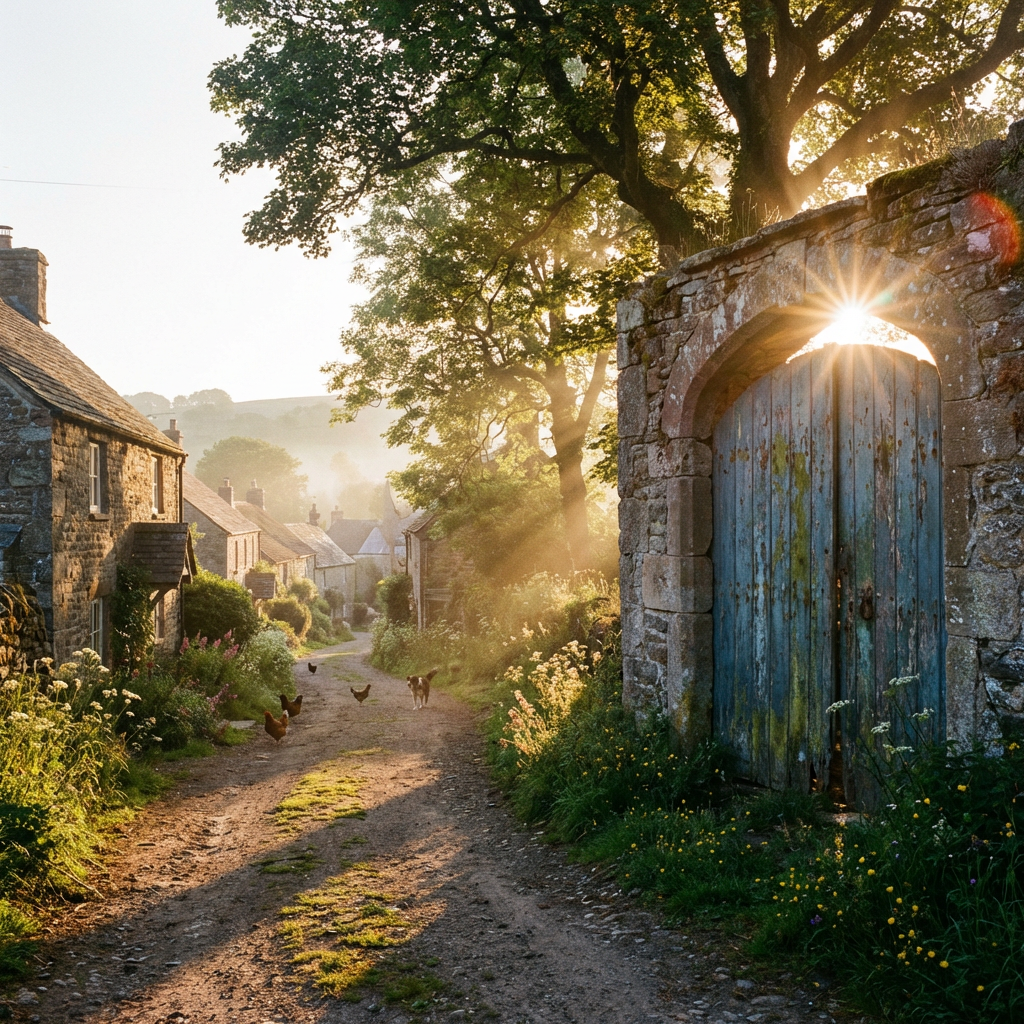
Every morning, the village of Longtown woke up to the same sound that echoed through the early cool air. It was the creaking of the old wooden gate that led to the vast fields stretching beyond the horizon. Farmers, donning their well-worn boots and carrying their weathered tools, pushed the gate open with a familiar groan. They walked through the narrow, winding path lined with dewy grass, their breath visible in the chilly dawn as they ventured into the golden haze of the crops. The air filled with the earthy scent of soil. It carried the promise of a fruitful day ahead. The gentle rustle of leaves harmonized with the distant calls of awakening birds.
But there was a problem.
The village had been losing water faster than it could store, creating a dire situation for its residents and their crops. The irrigation canal was drying earlier each year, causing panic among the farmers who relied on its flow to sustain their livelihoods. The elders held meetings to discuss strategies and share concerns, while the youth organised rallies to raise awareness and demand action from authorities. Despite their efforts, the government only responded by sending pamphlets with information that felt insufficient and disconnected from the urgency of the crisis. Still, water use barely changed, as old habits die hard and many villagers struggled to grasp the severity of the impending drought. Each passing season brought with it the stark reality that without significant action, the future of Longtown was hanging by a thread.
One day, a student named Ira noticed something simple.
The old wooden gate opened directly toward the canal. Anyone walking through it naturally stepped onto the path that led straight to the water pump, a focal point for the community where villagers gathered to fill their buckets and exchange stories about the daily happenings. But, paralleling this main route, there was an alternative path, the one that led to the rainwater harvesting pit. It was cleverly hidden behind a dense cluster of bushes, often overlooked by the casual passerby. This secret path, though less traveled, held its own stories, as the occasional visitor would venture in to observe the ingenious system of collecting and storing rainwater, reflecting the careful planning and respect for nature that the community valued so deeply.
“People are not choosing the pump,” she thought. “The path is choosing it for them.”
So she proposed a tiny change to her classmates.
With help from school authorities, the students built a second gate, a bright blue one, and placed it directly in front of the rainwater harvesting pit. This vibrant addition not only served as a barrier but also as an eye-catching feature that drew attention to the importance of water conservation. They carefully designed the gate with colorful decorations to engage the younger children, creating a welcoming entrance that conveyed a sense of ownership and pride in their environmental efforts. They added a sign painted by the schoolchildren: “Start here. Save water for tomorrow.” This message resonated with the entire community, encouraging everyone to be mindful of their water usage and inspiring a collective commitment to preserving this vital resource for future generations.
Nothing else changed. No fines. No lectures. No campaigns.
But the next morning, something shifted.
People paused. The blue gate was right there, which was open, inviting, and easy to enter. The old wooden gate was still there, but now it required a small detour.
Within a week, most farmers were starting their day at the harvesting pit, checking water levels and assessing the condition of their crops with careful attention to detail. They diligently adjusted flow rates to optimize irrigation efficiency, ensuring that each plant received the right amount of water at the right time. The pump was utilized sparingly, only when absolutely necessary, as they were mindful of conserving resources and minimizing energy costs.
A month later, the canal lasted longer than it had in years.
When the district officer visited, he asked Ira, “How did you convince them?”
She smiled. “I didn’t convince anyone. I just moved the gate.”
What this story teaches us about nudges
A nudge is a small change in the environment that makes the desired behaviour easier, more visible, or more natural, without restricting choice.
In the story:
- The blue gate is a nudge
- The path placement is a choice architecture
- The sign painted by children adds emotional resonance
- The old gate still exists, i.e., freedom remains
- The behaviour shift happens because the environment changed, not because people were forced
Nudges work because humans are guided by what is easy, obvious, and immediate.
Why nudges matter for climate adaptation
Climate‑positive behaviours often fail not because people don’t care, but because:
- the sustainable option is hidden
- the harmful option is default
- the better choice requires extra effort
- the system nudges people in the wrong direction
Nudges help communities shift without shame, blame, or overwhelm.
Lastly, sometimes all you need is a blue gate!
 JK Studio